
American Dream Achieved
IBA, as a fifty-one-year old business brokerage firm serving the entrepreneurial community of the Pacific Northwest, has been uniquely positioned since before the American Bicentennial celebration of 1976 to witness and hear the stories of thousands of people who have lived the American dream through entrepreneurship creating beloved businesses by employees, customers, and communities while finding personal fulfillment and financial prosperity through execution of their ideas, hard work, perseverance, and ability. In an effort to share these stories heard throughout the years by our team of business brokers, who are commonly regarded as the “best listeners” in the M&A industry, IBA has retained highly regarded writer, Nesha Ruther, to tell their stories. It is our goal to share one story a month. It is our hope that you will find the stories as inspirational and motivational as they are to us and the buyers who bought the businesses in IBA facilitated transactions in Washington, Oregon, and Alaska.
The Story of Bill and Julie Buck of Buck & Buck
By Nesha Ruther
Bill and Julie Buck first met in Boston through the Massachusetts Horticultural Society. Julie was working and getting her Master’s. Bill was in the theatre program at Emerson. The pair met working the legendary New England Spring Garden and Flower Show, which Julie was helping organize and to which Bill contributed his experience as a carpenter. “He taught me how to hammer and saw and do all the carpentry things that are essential when you’re building a flower show,” Julie says with a smile.
After Bill finished school, the pair decided they wanted to see more of the country. “We decided on Seattle, one, because it was on the coast, and two, because it has a very active theatre scene,” Julie says.
Bill continued his career as an actor for another five years until, in his words, “I thought, ‘what am I doing getting a base level salary?’ I was getting paid minimum wage.”
While Julie and Bill had never planned on becoming entrepreneurs, they had a passion when it came to caring for the elderly. “I’m one of five children and my grandfather lived with us, so I lived in a house where seniors were part of our everyday lives,” Julie says. “But I had also studied with a really amazing psychiatrist outside of the Boston area named David Moriarty, and his passion was to help people get well—this was in the early days of seeing how drugs could help people with depression and whatnot.”
Julie worked with Moriarty in the 70s, during a period in which the Reagan administration was closing state hospitals across the country with little recourse for the patients. Moriarty had identified substantial numbers of hospital residents, particularly women with post-partum depression, who were in need of immediate care the hospitals could no longer provide. Moriarty and Julie worked to bring these patients into nursing homes where they could continue to get the care they needed until they recovered. “[Moriarty] was an amazing psychiatrist whose whole philosophy was, ‘lets just get people well.’” Julie recalls.
Bill too remembers Moriarty fondly: “He had a house outside of Worcester, Massachusetts as his clinic, and he had two sheep and two dogs that had been raised together since they were babies, and he would take them everywhere with him, even in the car. So, when patients were getting ready to leave, the sheep would always try to get into the patients’ cars too, thinking it was time to go for a ride.”
David Moriarty not only introduced Julie to the world of nursing homes, which would become the main clientele for her and Bill’s business, but embodied the ethos that would underlie everything Buck & Buck did: a fundamental belief in every human being’s right care and dignity.
Soon after moving to Seattle, Julie took a job as an assistant administrator of a nursing home and quickly identified a pressing need in the world of elder care: clothes that could accommodate the varying abilities of the elderly.
“The nursing home I worked at was a 188-bed home in the city, and so people off the street would end up going into the hospital and from there be moved into a nursing home. They would arrive in a hospital gown with absolutely no clothing, no family, no anything. It was our job to try to find clothing for these people,” Julie says.
“This was at a time when the regulatory commissions in each state were very aggressive,” Bill adds. “They would walk into a nursing home and say things like ‘George Murphy has no clothes, you have to get him some.’ And if you were on Medicaid you got an allowance from the state and from the federal government, and that was the nursing home’s source of income for buying these clothes. So, Julie would have a list of people who needed clothing and she would take their measurements and go to Sears to buy them stuff and then bring it back to find out that it didn’t fit or they didn’t like it. She thought there had to be a better way.”
That better way became Buck & Buck, one of the nation’s premier providers of adaptive clothing designed for comfort, ease, and most importantly, dignity.
“Neither of us had any business degrees,” Julie says. “We knew nothing about business. What we did know was seniors and we had a passion for senior care, and we also lived in Seattle, which is the land of Nordstrom. We looked at this amazing company and thought ‘Well, it’s a clothing company, where do they get their clothes? We can figure this out!”
If starting a business wasn’t ambitious enough, Bill was in the middle of remodeling a boat and Julie in the midst of growing a baby. “Baby, Business, Boat. The three B’s,” Bill laughs.
To say that Buck & Buck is a family-run business would be a bit of an understatement. From the moment Bill and Julie’s son Phillip was born, he was along for the ride. “Phillip was born two weeks late, and we had a business meeting the next day. After that, we put him in a baby carrier and the next week he was in nursing homes with us.”
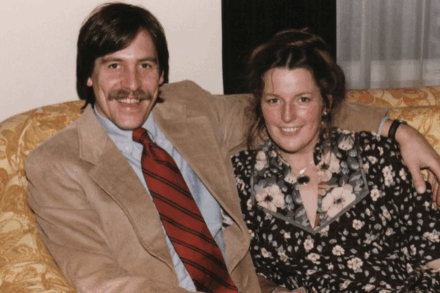
Julie and Bill at a business meeting the day after the birth of their son, Phillip.
Both Phillip and Bill and Julie’s daughter, Catherine were actively involved in the business from a young age. “They were raised with seniors, from the time they were really small they came to nursing homes with us all the time,” Julie says.
As with any family business, there was often little distinction between family and business. “I would get up at four in the morning to transcribe and fill orders and then the kids would get up and I would drive them to the nursery or later on, to school. The timing of life was always a challenge, trying to be involved in everything for our kids, going to every sporting event and all of that while working weekends. It was a lot of work.”
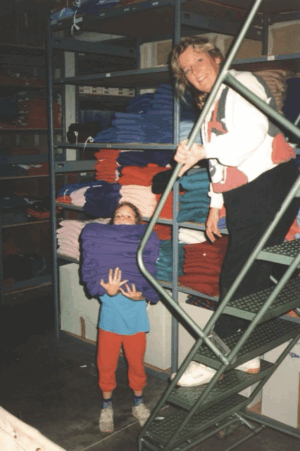
Bill and Julie’s daughter, Catherine, helps move into a larger warehouse in 1991
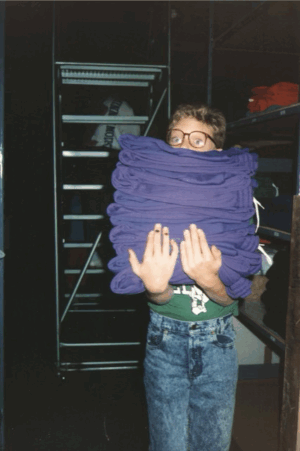
Phillip helping with the move
During the early years of the company, Bill, Julie, and baby Phillip visited every nursing home in Washington, Oregon, and Idaho to determine the needs of the residents. “For the first few years we would go on these road trips, so if we were doing Idaho we would be in Idaho for two weeks and go to one nursing home in the morning and another in the afternoon, plus setting up the clothing racks,” Bill says.
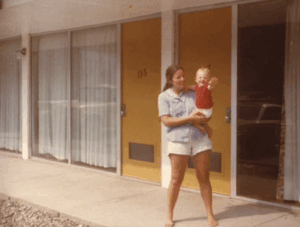
Julie and baby Phillip on a road trip to visit nursing homes.
“Then, once we were back in Seattle, we would fill in all the orders and then ship them to the facilities. Every piece of clothing would be individually bagged and labelled so all the nursing home staff had to do was distribute.”
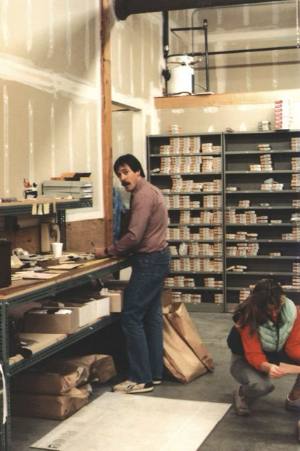
Bill filling orders after returning from a week-long trip servicing nursing facilities in Eastern Washington.
While Julie handled the logistics end of the business, making appointments, taking orders, and designing adaptive clothing, Bill handled the creative side. “Bill has always been the real artistic end of the business,” Julie says proudly. “He developed all our literature, posters, brochures, that kind of thing. And I would set up appointments, go to the homes with another staff member, take the patients’ measurements, and find out what they needed.”
At the beginning, almost every piece of adaptive clothing Buck & Buck created was custom-made for individuals they had met themselves. “One of our first hires was a seamstress because we were always having to hem and alter clothing. But for every article of clothing we made, I was the one standing in a nursing home saying, ‘If that’s what you want, I’ll figure out how to do it.”
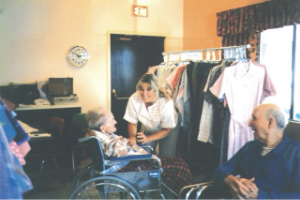
Julie helping a nursing home resident pick out clothing items.
Today, adaptive clothing is a well-established industry, but in the 1980s, Julie and Bill were pioneers. It was Julie who travelled to nursing homes and saw firsthand the need for rear-closure dresses for women, Velcro booties for swollen feet, side-zip pants, and more.
While such things might seem minor to those of us who are able bodied; for the disabled and elderly, it is a matter of dignity. Much of adaptive clothing is particularly vital for those who need help using the restroom, and can prevent embarrassing accidents and frustration on the part of both patient and staff.
“I remember the woman I designed the side-zip pants for,” Julie recalls. “It was at a nursing home in Poulsbo, Washington, and a woman came in wearing slacks and a blouse. The staff kept trying to talk her into wearing rear closure dresses because it would be easier for them to make the transfer to toilet, and the woman started crying. I said to the staff, ‘Wait a minute, what if I took the pants she wants, and I put a zipper down both sides so that no matter which side of her you’re standing on, you can release one side, and then when you do the assist to toilet, you’re not bending over to pull the pants down.’ The pants will drop, she’ll transfer, and the staff won’t injure their backs. They’ll be happy and she’ll be happy.”
Clothing, while often considered frivolous or a matter of vanity, is one of the essential ways human beings construct our identity. Choosing what we wear in the morning is a fundamental act of human agency, a way of saying This is who I am. Aging inevitably strips us of so much of our agency and identity, we lose the ability to choose how we live, where we go, what we eat. Julie and Bill were not just providing clothing, they were providing people with the ability to assert agency and express their individual identity.
“She just wanted to wear slacks, which is so easy to identify with,” Julie says. “If they wanted it, I was determined they could have it.”
In the early days of Buck & Buck, that didn’t just mean clothing either. “I remember we were at a nursing home in Yakima, Washington, and there were some young people at this particular home who wanted rock posters for their walls. So, Bill and I went to Pike Street Market and got posters of the bands they liked and shipped them back to them,” Julie says, laughing.
Another time, Julie met a patient with encephalitis, which resulted in his head being oversized. “He said, ‘I’ve always wanted a baseball cap, but no baseball caps fit me.’” Bill recalls.
“I took three existing baseball caps, cut up the back, and sewed the pieces together so they would fit him,” Julie finishes.
Over time, as Buck & Buck developed a more robust collection of adaptive clothing, the need for specially-made items decreased. “We went to every nursing home twice a year and essentially, we were there to help patients replenish their wardrobes. In a nursing home, your clothing can be washed daily, so you have a lot more wear and tear,” Julie says. “Probably 80% of what we were selling was regular clothing but adapted to the needs of the laundry. So, I made sure we didn’t bring in any wool ever. Our shirts were a poly cotton blend, we made sure we chose items that could withstand that, and then we did all the hemming and altering to make sure it would fit.”
“After doing this for several years we had developed a very extensive line of adaptive garments that worked for a lot of different people and different situations,” Bill says. “So, at that point we said, ‘Why can’t we do mail order?’ This was pre-internet, so we made a catalog.”
“He did it all,” Julie interjects.
Buck & Buck catalogs were mailed to nursing homes across the Pacific Northwest and streamlined the process of travelling and taking residents orders that Bill and Julie had been doing for years. “It meant family members or social workers could look through the catalog and identify what a resident would need. They could say, ‘well he just had a stroke so he really needs a Velcro shirt or rear closure pants,” Bill says “It also meant nursing homes could make orders without waiting for us to make a spring or fall appointment. People were calling us regularly.”
Bill’s connection to the Seattle arts scene made him friendly with many local photographers, so for each catalog he would organize photo shoots, design the spreads, and write the marketing copy.
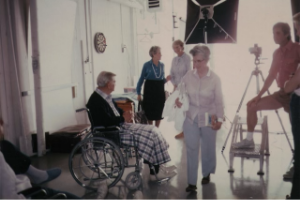
The set of Buck & Buck’s first photoshoot
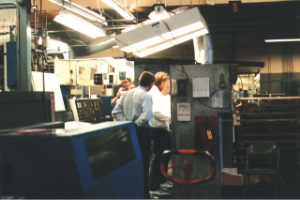
Press check on Buck & Buck’s first catalog

Julie’s father modelling for a Buck & Buck catalog
Eventually, Bill took over the photography himself at the shoots, completely overseeing the creative side of the business. “That was a really fun part,” he says. “I really enjoyed what I was doing.”
As the business grew, Bill and Julie were able to lean into their strengths and passions while hiring employees to manage the rest of the business such as taking orders, warehouse operations, and more. “At our height, our staff was about 26 people,” Julie says.
Many of these employees stayed on for the 40 years of Bill and Julie’s ownership, and have continued on under the new owners as well, displaying a loyalty and commitment that is hard to find in the modern workplace. “Julie had the presence of mind to make sure people stuck with us,” Bill says. “We had a profit-sharing plan and a 401k that made people want to stay on and kept us from having to retrain.”
When hiring, Julie was also very conscious of the fact that this was not a typical job, and required a specific sort of temperament and skill set. “I always felt this was an unusual job, going into nursing homes,” she says. “So, when I interviewed people, I would offer them the job on a trial basis so they could try it on for size because it is different from something else they might be doing.”
This also better allowed Julie to gauge if the employee had the patience and care required to interact with seniors and other vulnerable people. “You have to be really comfortable with seniors because you’re going to have your arms around people, you’re going to put a measuring tape around them,” Julie says. “And sometimes people are difficult in nursing homes but I think it’s all in your approach. I would always introduce myself, shake their hand, and treat them with respect.”
Buck & Buck opened its doors in 1978, and built a thriving clientele among nursing homes in the Pacific Northwest. But with the success of the catalog, they decided to expand their reach, sending it out nationally in 1981. “We created a mailing list by writing to every single state and asking for a list of all their nursing homes,” Julie says.
“Nobody else was doing this, so if you were working at a nursing home and thinking, ‘how am I going to find all these different things for all my residents,’ and then you get a catalog in the mail which basically says ‘here we are!’ you were going to use it!” Bill says.
Within a year, Buck & Buck went from providing adaptive clothing to nursing homes across the Pacific Northwest, to providing adaptive clothing for half of the nursing homes in the United States, roughly 8,000 clients from coast to coast.
To accommodate the influx in orders, Julie & Bill contracted seamstresses in the Carolinas, California, and elsewhere. “The LA area had a lot of contract shops where you would send them your design, they would give you a bid, and you’d say ‘okay, lets get 200 of these,’” Bill explains. “They would ship to us and then we would fulfill all of the orders out of our warehouse in Seattle.”
Bill and Jule ran Buck & Buck for over 40 years, and witnessed plenty of challenges along the way, but every time it was the strength of their relationships and their commitment to patients that got them through. “We had the eruption of Mount St. Helen’s in ’80, and that almost took us under,” Bill says.
At the time, Julie and Bill were still doing their road trips to Oregon, Eastern Washington and Idaho. “Our entire cashflow was dependent on road trips to these places which all of a sudden were buried in ash, so we were having serious cashflow problems.” Bill continues. “But what we ended up doing was calling all of our suppliers and saying ‘look, we’ve been working with you for two years now and we’re not going to be able to pay you on time, but if you can extend our billing process a little bit, we’ll be able to do it.”
“Bill got on the phone and talked to everybody and they were like, ‘No problem, you’ve been great customers and we understand the situation.’” Julie finishes.
When faced with a situation outside their control, it was the relationships Buck & Buck had built that saw them through.
At the heart of Buck & Buck’s success, however, was the relationship between Bill and Julie. Even spending just an hour in their company, it is abundantly clear the admiration and respect they have for each other, and the fun they have together. When asked if they ever disagreed on anything, there was only one incident that came to mind.
“Julie, at one point, approached me and said, ‘if we change ownership from 50-50 to 51% for me, we can be a women-owned business and qualify for all kinds of federal funds. I said ‘that’s a hard no!’” Bill laughs. “I was thinking this is the first step; I’m going to be totally phased out.”
“Bill and I had always worked together,” Julie says fondly. “We met by doing the New England Spring Garden and Flower show, so we were used to working together. And we had such different focuses as far as running the business was concerned. He always did the creative work and I did the operations, we just worked well together.”
During the times where Julie was on the road visiting nursing homes and she didn’t have the children with her, it was also Bill who handled the childcare. “I stayed home, took care of the kids, made dinner and all of that,” he says. “I made a lot of macaroni and cheese.”
In addition to the eruption of Mt. Saint Helen in 1980, Buck & Buck also withstood the COVID-19 Pandemic forty years later. “We were closed for eight weeks and then we reopened slowly but surely,” Julie says. Bill put his carpentry skills to use by building barriers to keep employee service reps six feet apart.
“We had left the website up and running during COVID saying ‘We’re closed, but place your order and when we get back to work, we’ll call you. When we finally did, we had over 2,000 orders.”
Bill and Julie continued to run the business, but they also began to think about transitioning out of it. “I’m 76 and he’s 77,” Julie says. “Our children are also entrepreneurs with their own businesses, so we knew they didn’t want to take over ours. We decided at some point we’re going to have to move this on to somebody else.”
Julie and Bill’s next-door neighbor is in mergers and acquisitions and helped them prepare the business for sale. They eventually decided to work with Seth Rudin from IBA to help them find a buyer.
“It’s a unique business so you can tell if a person has the ability to understand the challenges,” Julie says. “The world of aging and nursing homes has changed tremendously. And during COVID many small towns across the country saw their nursing homes change, with big corporations coming in and buying them up, so it’s a whole other world now.”
Through Seth and IBA, Bill and Julie were connected with a buyer who seemed to understand that world and cared for seniors in the same way Julie and Bill did. “She was a really good fit and understood adaptive clothing for unique needs,” Julie says of their buyer.
Bill and Julie sold Buck & Buck in December of 2024, almost a year to the day from when we spoke. And while the transition into retirement isn’t always an easy one, they are both happy and confident in the choice they’ve made. “I was ready to retire,” Bill says. “Julie could have kept working for another 20 years, but she’s glided into retirement without any stress.”
When asked about their experience working with IBA, Bill and Julie grow even more enthusiastic. “Seth was great! We’re having dinner at his house on Sunday!” Bill says.
“What we do is weird and different but Seth really has a unique ability to step into your business,” Julie says fondly. “He has a really easygoing personality and is a very easy person to work with.”
Since retiring, Bill has remodeled and sold another boat, and Julie has been helping Buck & Buck’s new owner with the transition. They also have been prioritizing spending time with their family that is still in New England and taking the time to travel around Washington and British Columbia.
While the pair may have been brought together by New England flowers, it is the landscape of the Pacific Northwest that has become their most enduring love.
For Julie, the American Dream is a matter of opportunity. “It’s the luck of life,” she says. “The fact that as a woman born in 1949 in the United States, I grew up to understand there were no fences in my way. You can do whatever you want to do, dream as big as you want. I never would have known I was going to own a business, but I think being a woman in the U.S. puts you ahead of so many other people on this planet and I highly respect that.”
“There were also many times in the course of growing the business where people would say, ‘Why don’t you franchise it? You could be everywhere.’ But we would always say ‘At what cost?’ We have enough. We have a lot of independence; we have enough money to raise our children and put them through school. We have time and quality of life. And to me, that is the American dream, to choose to be a family, to help others, but not having to be Jeff Bezos. To me, the American Dream is having enough, and we have that.”
In that, like in so many things, Bill and Julie are in total agreement. “In our life, both in business and in raising our children, there has always been two guiding principles,” Bill says. “One is you always tell the truth. We’ve always been proud to pay our taxes, we’ve had the IRS in for audits and once they came in and said, ‘actually we think the government owes you money.”
“And the second is kindness,” Julie finishes with a smile. “Just live a life of kindness, be a little bit kinder to everybody. In business and in life, that’s served us well.”
Bill and Julie have lived their life according to these principles and embedded them into a business that provides vulnerable people with agency and dignity, no matter their age or condition. If that’s not the American Dream, I don’t know what is.
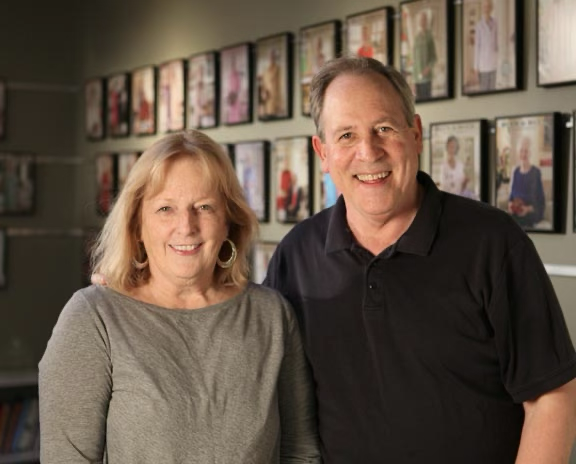
Julie and Bill photographed for BBC America

Nesha Ruther
Nesha Ruther is a writer and editor from Takoma Park, Maryland. She received her BA in English Creative Writing from the University of Wisconsin Madison, where she received a full tuition scholarship through the First Wave program based on academic and creative merits. She was a 2016 Young Arts winner in spoken word, a 2016 winner of the DC Commission of the Arts Larry Neal Writing Award, a 2017 winner of the Mochila Review Writing Award, which was judged by Nikki Giovanni, a 2020 winner of the University of Wisconsin’s Eudora Welty Fiction Thesis Award, and a 2022 Tin House Winter Workshop Participant. She has been commissioned to write and perform for the National Education Association, and has had work published in NarrativeNortheast, Angles Literary Magazine, Beltway Quarterly and more. She recently completed a tenure as the Lead Writer at Bond & Grace, and a co-host for the podcast Lit Talk (https://www.bondandgrace.com/the-lit-talk-podcast). Currently, Ms. Ruther is teaching classes and working on her Master’s Degree at the University of Kentucky.