IBA, as the premier business brokerage firm in the Pacific Northwest, is firmly established as a respected professional service firm in the legal, accounting, banking, mergers & acquisitions, real estate, and financial planning communities. Periodically, we will post guest blogs from professionals with knowledge to share for the good of owners of privately held companies & family owned businesses. The following blog article has been provided by Harry Roma of Oretrack Industrial Strategy Group ( www.oretrackstrategy.com):
Buying a Food Production Company: Look Beyond the Recipe
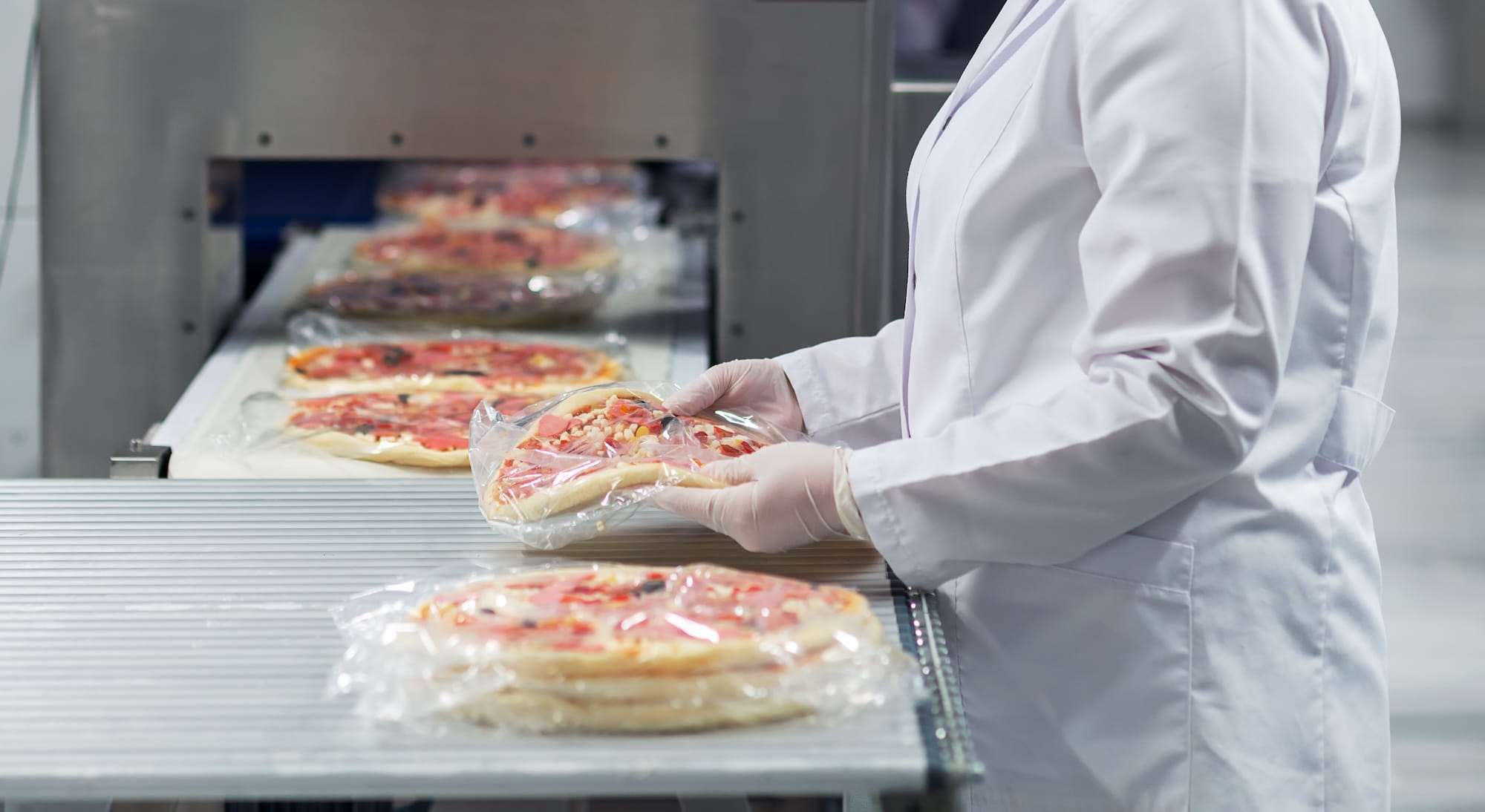
Buyers who look at a food company often start with the product. They taste it, like it, and picture it on a grocery shelf. A food production company, meaning a plant that makes product for grocery chains, restaurants, and other brands, is a different kind of purchase. Taste still matters, because customers have to reorder, but the questions that decide whether the deal works are mostly operational. It is closer to buying a small factory than buying a recipe. I built and sold a food production company, and what follows draws on that experience and on what the public record shows about larger deals.
Where the Recipe Fits – Sellers often describe a family recipe or secret formula as the heart of the business, and it can be an asset. In my experience, though, a competitor or a co-packer can often come close to a given taste, even if matching the cost, texture, and shelf life at scale is harder. A recipe that works in a small kitchen usually has to be reworked to run on industrial equipment, survive freezing, and hold up on a shelf. A buyer should ask to see the formula and the production process written down, because a recipe that lives in one person’s head is a risk. Know-how is not limited to the recipe. If the product depends on a live culture or starter, ask whether it could be replaced if it were lost. After that, most of the diligence time belongs on the plant, the process, the customers, and the food safety record.
Make or Buy – The question I find most revealing is which inputs the company makes itself and which it buys. In my own frozen meal production, the products with the best margins were the ones where we bought the noodles and the sauce from suppliers and concentrated on assembly and packaging. Making every component from raw ingredients added labor, equipment, and complexity, and it rarely paid for itself. Buying in components tends to make sense at lower volumes, and the answer can change as volume grows and the company can justify its own cooking or forming lines. Freight on heavy items such as sauces and the supplier’s own margin belong in the comparison, and so do minimum orders, quality consistency, and backup sources, since buying in creates a dependence of its own. A buyer should find out what is made in-house, why, and what it would cost to buy instead. A company that makes one simple product from a few ingredients can be easier to run and to scale than one managing dozens of components. Imported inputs deserve a hard look as well, since they can carry exposure to tariffs, shipping costs, and sometimes exchange rates, depending on how supplier contracts are priced.
Fresh, Frozen, and Ready to Eat – Shelf life shapes the business. Fresh product such as prepared salad has days, not months, so fresh producers usually serve customers within a short delivery range, deliveries are frequent, and waste is a constant cost. Frozen product can travel farther and be stored, which widens the customer base and eases scheduling. The form of the product matters too. I found that tempeh was harder to sell raw, to customers unfamiliar with preparing it, than cooked and ready to eat. A buyer should know whether the target’s costs are driven by delivery routes and spoilage, as with fresh product, or by freezing capacity and cold storage, as with frozen.
The Building – Buyers often underestimate the real estate. Ask whether the company owns or leases the facility. An owned building carries a mortgage or ties up capital that could be used elsewhere, and a lease brings rent increases, renewal risk, and the question of whether the landlord will allow a new owner to expand. A plant in a prime location can look impressive and still be a poor business if rent and wages absorb the margin. Labor and industrial space costs vary widely from state to state and even between neighboring metro areas, so a buyer should price the specific location and not an industry average. For a producer that sells mainly to nearby customers, it is also worth checking whether population and demand around the plant are growing.
Large Retail Contracts – Supplying a large grocery chain looks like the goal of every food producer, and it can be, but the contract matters. In my experience large retailers expect product to be available, and a supplier that cannot fill orders puts the account at risk. The business then faces a capital decision. It can expand the plant, add shifts, outsource part of production, or negotiate a slower rollout, and each choice carries its own cost in equipment, space, and labor. A buyer should ask whether a fast-growing account is already straining the plant, what share of sales comes from any single customer, how much notice that customer must give before leaving, and whether the plant can meet projected orders without major new investment.
Labor and Automation – Food production is labor intensive. Look at labor hours per unit produced, how much of the packing is done by hand, and how much the operation depends on a few skilled employees or on the founder. All else equal, a plant that runs because the owner is there every day is worth less than one whose procedures are written down and followed by a trained team. Automation can improve margins, but it takes capital and volume to justify, and a buyer should be skeptical of any projection that a machine will pay for itself without seeing the production numbers behind it. Check usable capacity as well as rated capacity: bottlenecks, sanitation and changeover time, yields, downtime, and freezing and storage limits all reduce what a plant can actually produce.
Who Inspects the Plant – Regulation changes what a plant is worth. As a general rule, a plant that makes products with more than 3 percent raw meat or 2 percent or more cooked meat falls under USDA inspection, which puts inspectors in the plant on a routine basis, while most other food plants answer to the FDA. Poultry has its own provisions and some plants are inspected under state programs, so a buyer should confirm the plant’s actual status rather than rely on the percentages. It matters at closing, because federal rules require a new application for a grant of inspection when a meat or poultry establishment changes ownership, and FDA registration has its own ownership-change requirements. Large retailers add their own layer. Many, including Walmart and Costco, require or strongly prefer suppliers to hold a food safety certification recognized by the Global Food Safety Initiative, such as SQF or BRCGS, with requirements varying by product and approval route, so a plant without one may be closed to those customers until it is certified. Ask for the certificate, the most recent audit results, and any open findings.
The Paperwork That Matters – Start with a clear definition of profit. Ask how it was calculated, and look at owner compensation, rent paid to related parties, customer rebates and deductions, spoilage, inventory age, and the cash needed to fund orders between production and payment. On the operations side, ask for the food safety plan, inspection findings, corrective actions, sanitation records, and allergen and labeling controls, since a clean recall history does not show that the controls are working. Then confirm what actually transfers at closing. Customer contracts, the lease, brand licenses, formulas, and supply agreements may require consent or contain termination rights. Ask about traceability exercises, recall procedures, and insurance terms, because the cost of a recall can land on whoever owns the business at the time.
What Larger Buyers Pay For – Large buyers pay for a bundle of assets: plants, distribution, brands, and customer relationships. The deals below show how much of the price sits on the operating side. In 2019, CJ CheilJedang of South Korea acquired an 80 percent stake in Schwan’s Company in a transaction announced at $1.84 billion. CJ’s own announcement described the purpose largely in terms of infrastructure: its U.S. production bases would grow from five to 22, along with logistics, distribution, and sales networks across the country. The deal gave an Asian frozen food brand a ready-made U.S. manufacturing and distribution base.
Michelina’s tells the story from the founder’s side. Jeno Paulucci started Luigino’s, the company behind the Michelina’s brand, in Duluth, Minnesota in 1990, after earlier selling his frozen pizza business to Pillsbury. It was renamed Bellisio Foods in 2007 and sold under its own brands, under restaurant and other brands such as Boston Market and Chili’s, and as private label. In November 2016, Charoen Pokphand Foods of Thailand agreed to acquire it for $1.075 billion. CPF described Bellisio as the third-largest producer of single-serve frozen entrees in the United States by unit share, with relationships across more than 50,000 distribution points and a plant in Jackson, Ohio that could reach more than half the country within 24 hours. For the twelve months ended September 2016, Bellisio reported adjusted net sales of $668 million and adjusted EBITDA of $82 million, a margin of about 12 percent. Even large buyers revisit their footprint. Bellisio bought the bankrupt Austin Packaging Company, a Minnesota producer of sauces and frozen entrees, in 2013 for a little over $6 million, and announced in 2018 that it would close the plant. A buyer should decide at the outset what role each plant will play and for how long.
Turning Around a Struggling Producer – Consider a prepared-salad producer with $12 million in annual sales and $250,000 in EBITDA, about a two percent margin. The example is hypothetical, but it shows the kinds of problems a buyer may meet. The first question is whether the thin margin is structural or fixable. A buyer can examine whether customer contracts allow ingredient and packaging costs to be passed through, whether a long list of low-volume products is consuming line time, how much of the packing could be automated, whether the lease is priced above comparable space elsewhere, and whether the plant is chasing accounts that a shorter, more selective customer list would improve. Each fix has a cost. Remediation, working capital, relocation or recommissioning, and losses during the transition all have to be counted before a low purchase price looks like a bargain. If the problems can be fixed at an acceptable cost, the business may be worth buying. If the category cannot carry the costs of its location, the right price reflects that. A buyer who knows which case applies negotiates very differently from one who simply likes the product.
Walking the Plant – Walk the facility with someone who understands food safety and refrigeration. Several things are easy to miss in the financial statements: the condition of floors and drains in washdown areas, whether condensation drips from the ceiling in cold rooms, the age and condition of the refrigeration system and what a replacement would cost, and what the plant pays for wastewater. Wastewater charges can depend on the strength of what is discharged as well as the volume, so ask for the current sewer tariff and the plant’s discharge permit. Equipment that uses older refrigerants can become costly to service, so ask what the system runs on. Ask for any recall or complaint history and the last two years of utility and sewer bills.
A food production company is a factory with customers, and it should be valued like one, whether it is thriving or in trouble. In my own business, the hard questions were about inputs, capacity, and customers rather than the recipe. The plant, the people, the building, and the cost of each input decide whether the business makes money, and that is where a buyer’s time belongs.
About the Author: Harry Roma built and sold a food production company and advises businesses and institutions on operational improvement, turnarounds, and transitions through Oretrack Industrial Strategy Group.
If you have questions relating to the content of this article, Harry Roma of Oretrack Industrial Strategy Group would welcome the opportunity to answer them. Mr. Roma can be reached at (202) 487-9418 and [email protected].
IBA, the Pacific Northwest’s premier business brokerage firm since 1975, is available as an information resource to the media, business brokerage, mergers & acquisitions, and real estate communities on subjects relevant to the purchase & sale of privately held companies and family owned businesses. IBA is recognized as one of the best business brokerage firms in the nation based on its long track record of successfully negotiating “win-win” business sale transactions in environments of full disclosure employing “best practices”.